Let’s be real for a second. Every time you pull up to a petrol pump and watch the meter tick past ₹1,000 for half a tank, there’s that little voice in the back of your head saying “there has to be a better way.” For millions of Indian families commuting 40, 50, sometimes 80 kilometres a day, that voice has gotten a lot louder lately.
CNG cars have been around for a while. But 2026 is genuinely different. The options are better. The factory-fitted systems are more reliable. And the savings? Still very real. Running costs typically sit around ₹3 to ₹4 per kilometre for CNG, compared to nearly double for petrol in city traffic. For someone driving 1,500 km a month, that math starts to feel quite significant over a year.
So whether you’re a daily office commuter, a family of four looking to stretch your budget, or just tired of petrol prices playing games with your finances, this is a proper look at the best CNG cars India 2026 has to offer. Not just specs and sticker prices, but what ownership actually feels like.
Who Should Actually Read This
If you drive more than 1,200 km a month in city conditions, a CNG car will likely pay back its premium over a petrol variant within a year or two. If you cover less than that, petrol or even an entry-level EV might make more sense depending on your city’s charging infrastructure. This guide is most useful for daily commuters, cabbies, small business owners, and families looking for their primary city car.
The CNG Car Landscape in 2026
Something has quietly shifted in the last couple of years. CNG cars used to mean either a basic Maruti hatchback or a converted taxi that smelled faintly of compressed gas. Not anymore.
There are now over 30 factory-fitted CNG models available in India, starting from under ₹4 lakh and going past ₹15 lakh. Tata brought proper SUV builds into the CNG fold. Hyundai added connected tech and dual-cylinder tanks. Maruti refined its engines to the point where the Celerio CNG is pushing 35+ km/kg on the ARAI chart. The “compromise” feeling of earlier CNG cars has largely disappeared from the modern lineup.
The infrastructure story has also improved meaningfully. There are over 8,000 CNG stations now, covering 300+ districts. That used to be a genuine concern for anyone outside major metros. It still isn’t perfect in Tier 2 or Tier 3 cities, but it is dramatically better than even three years ago.
The Cars Worth Considering
1. Maruti Suzuki Celerio CNG – The Mileage Champion
If someone asks you which CNG car gives the best mileage in India, the answer right now is the Celerio. Its ARAI-certified figure sits at 35.6 km/kg, and real-world owners are reporting somewhere between 28 and 32 km/kg in mixed driving. That is genuinely impressive.
The car starts at around ₹4.70 lakh and tops out around ₹5.51 lakh. For a factory-fitted CNG car at that price with those efficiency numbers, there isn’t much competition.
The honest caveat? It’s small. Very small. If you regularly carry four adults or have any real luggage needs, it gets cramped fast. The boot space is limited even without factoring in the CNG cylinder. And the engine, while frugal, isn’t exciting at any point during a drive. It works, reliably and efficiently, but don’t expect it to put a smile on your face.
Best for: Metro commuters, college students, second household car, tight-budget buyers.
2. Maruti Suzuki Wagon R CNG – The Practical Family Pick
The Wagon R is the kind of car that everyone makes fun of until they actually sit inside one. The tall-boy design gives it enormous headroom and cabin space for a hatchback at this price point. Families that shuttle kids around, or tall drivers who feel cramped in most small cars, tend to love it.
At 34.05 km/kg, the mileage is right behind the Celerio. Real-world ownership stories from forums and user groups consistently mention figures of 26 to 30 km/kg, which makes it one of the most economical cars to run in India.
Pricing starts around ₹5.47 lakh. The AMT variant adds convenience for city stop-go traffic without costing much more. One thing I noticed reading through owner forums is that the Wagon R CNG tends to attract genuinely loyal owners who buy it again when they upgrade. That tells you something.
One real-world gripe that comes up often: the ride quality on broken urban roads isn’t the smoothest. The suspension handles bad patches, but it’s not cosseting. Noise levels from the engine in CNG mode can get noticeable on highways too.
Best for: Families of 4, city commuters needing practicality, drivers who value cabin space over style.
3. Tata Punch iCNG – Best CNG Car Under 8 Lakh for Safety
The Punch changed the conversation about what a CNG car could look like. It’s a compact SUV with 187mm ground clearance, a twin-cylinder CNG setup that keeps boot space usable, and most importantly a 5-star Global NCAP rating. That last point matters more than most people think when they’re comparing options.
To be honest, there’s no other CNG car under ₹10 lakh that comes close on safety credentials. The twin-cylinder tank design was Tata’s clever solution to the age-old “CNG cars kill your boot” problem. And it mostly works.
Prices range from ₹6.75 to around ₹10.60 lakh depending on variant. The CNG version gives around 26.99 km/kg, which isn’t as high as the Marutis but is solid for a car with this kind of SUV stance and build. The AMT option makes urban driving easy.
Where it falls short: the 3-cylinder engine can get vocal at higher revs, and some owners mention it feels a bit short on power during overtaking, especially on highways. The after-sales service experience with Tata has also been inconsistent, depending on the city and dealership.
Best for: Young professionals, safety-conscious families, SUV body style preference with a CNG budget.
4. Maruti Suzuki Swift CNG – For When You Don’t Want to Feel Like You’re Compromising
The Swift always had an image problem in the CNG space. It felt like people chose it despite wanting it rather than because they did. That’s changed.
The new Swift CNG runs on Maruti’s Z-Series 3-cylinder engine, which is actually a step up from the older 4-cylinder K-Series in terms of refinement. ARAI mileage comes in at around 32.85 km/kg. Real-world highway driving from owner reports suggests high 20s to early 30s is achievable.
Pricing sits around ₹7.7 to ₹8.3 lakh for the CNG variant. The sporty look, sharp handling, and lighter feel make this the one CNG car where driving it around town doesn’t feel like a chore. It still feels like a Swift, which is a genuine compliment.
The cons are straightforward. It’s a 5-seater but four adults in any kind of comfort is ambitious. Rear legroom was never the Swift’s strong suit and it still isn’t. Boot space could be better.
Best for: Solo commuters, couples, buyers who want efficiency without giving up driving enjoyment.
5. Maruti Suzuki Dzire CNG – The Sedan That Makes Practical Sense
Sedans have fallen out of fashion in India. The Dzire hasn’t cared.
At 33.73 km/kg ARAI mileage, it’s one of the most fuel-efficient sedans you can buy in India right now at any fuel type. The boot is proper sized, the ride comfort is noticeably better than any hatchback at this price, and the cabin feels grown-up without being flashy.
For Ola and Uber operators, or professionals who spend significant time in the car, the Dzire CNG is probably the most sensible overall package in the sub-10 lakh CNG segment. Cab drivers have been running Dzires into high-kilometre territory for years and swearing by them.
Pricing starts around ₹7.55 lakh. The cabin isn’t particularly exciting but it’s comfortable and durable, which matters more over 100,000 km than any feature list.
Best for: Commercial operators, families wanting sedan practicality, highway commuters.
Also Read Top 5 Cars Under Rs 20 Lakhs – Best Picks for Every Need!
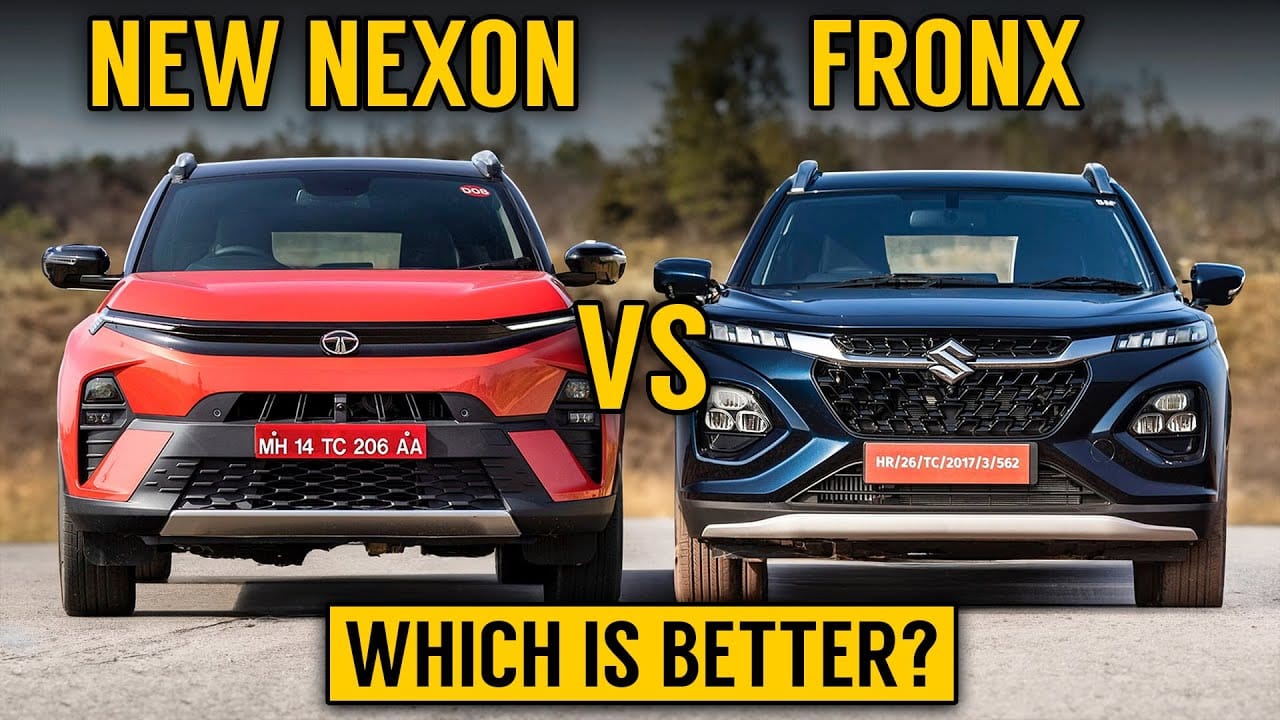
6. Tata Nexon iCNG – CNG’s First Real Turbocharged Contender
The Nexon iCNG is a genuinely interesting car. It uses a 1.2-litre turbocharged petrol engine with CNG integration, which makes it the only turbo CNG car in the mainstream Indian market right now. The result is performance that doesn’t feel neutered in CNG mode, unlike most other CNG cars where power noticeably drops.
Here’s where it gets interesting: actual driving experience in CNG mode is significantly better than most rivals. The turbo takes some of the edge off the usual CNG sluggishness on open roads.
ARAI mileage is around 18-19 km/kg, which is lower than the Maruti options by a fair margin. But the Nexon brings 5-star safety rating, connected features, AMT gearbox, and premium interior quality to a CNG car. Pricing starts around ₹8.30 lakh.
The catch is running cost. At 18-19 km/kg against the Celerio’s 35+, the monthly CNG bill will be noticeably higher. You’re paying for the driving experience and features. Whether that trade-off works for you is personal.
Best for: Buyers who want a feature-rich CNG SUV without giving up driving dynamics.
7. Hyundai Exter CNG – The Feature-Packed Budget SUV
Hyundai has been quietly building a strong CNG lineup. The Exter CNG brings modern tech, a fresh micro-SUV design, and a dual-cylinder option that protects boot space into the sub-9 lakh segment.
The engine puts out 69 hp in CNG mode with claimed mileage of around 27.10 km/kg. Real-world numbers from owners tend to be in the mid-to-high 20s. The infotainment is well-specced with wireless Android Auto and Apple CarPlay, the cabin quality is distinctly Hyundai which means solid and well-finished.
Pricing ranges from about ₹6.86 to ₹8.76 lakh. It’s a legitimate alternative to the Punch iCNG for buyers who prioritise interior quality and features over the Tata’s safety rating advantage.
A few owners have mentioned that the single-cylinder variant compromises boot space noticeably, so the dual-cylinder variant is worth the premium if you regularly carry luggage.
Best for: Tech-savvy young buyers, urban micro-SUV seekers, buyers migrating from older hatchbacks.
8. Maruti Suzuki Ertiga CNG – The 7-Seater That Actually Works
Ask anyone who needs a 7-seater under ₹15 lakh and the Ertiga keeps coming up. In CNG trim it’s possibly the most economical large-ish family car available in India.
Owner experiences from people clocking 30,000+ km on the Ertiga CNG consistently report 20 to 23 km/kg in real conditions, which is remarkable for an MPV. The third row folds, the ride is comfortable, and the reliability track record over years of Ertiga ownership stories is genuinely strong.
Pricing starts around ₹10.25 lakh for the CNG variant. The cons? It looks like a van to some eyes. The third row is kids-only for long journeys. And if you’re used to larger 7-seaters, the Ertiga will feel compact.
Best for: Larger families, school pickup duties, buyers needing 7 seats with a reasonable budget.
What No One Tells You About Owning a CNG Car
A few things worth knowing before you sign the papers:
Spark plugs wear out faster on CNG, typically around every 15,000 to 20,000 km rather than the 30,000 km you’d get on petrol. Factor that into your maintenance budget.
Always start your car on petrol for the first minute or two and switch back to petrol before you park. This keeps the fuel injectors healthy and avoids deposits. Most people learn this from a mechanic rather than the owner’s manual.
Cylinders need hydrostatic testing every three years by law. Make sure your service centre does this properly. It’s not optional and skipping it creates real safety risk.
The boot space issue is real on single-cylinder cars. If you carry luggage regularly, pay close attention to which variant you’re buying and whether it uses a twin-cylinder setup.
Quick Comparison: Which One for You?
Tightest budget, maximum mileage: Maruti Celerio CNG
Best for a family of four: Maruti Wagon R CNG or Dzire CNG
Safety is the priority: Tata Punch iCNG
You want to actually enjoy driving: Maruti Swift CNG
Need 7 seats: Maruti Ertiga CNG
Want features without petrol bills: Hyundai Exter CNG or Tata Nexon iCNG
FAQs
Which is the best CNG car in India in 2026?
There isn’t one single answer because it depends on what you need. For pure mileage and lowest ownership cost, the Maruti Suzuki Celerio CNG is hard to beat at 35.6 km/kg. For the best safety credentials in a compact SUV body, the Tata Punch iCNG stands out as the only 5-star rated CNG car under ₹10 lakh. And for families needing a practical sedan with strong real-world efficiency, the Maruti Dzire CNG consistently earns high owner satisfaction. If you drive heavy daily mileage, any of these three will serve you well.
Is it worth buying a CNG car in India in 2026?
For anyone driving more than 1,200 to 1,500 km a month, yes, it almost always makes financial sense. CNG running costs work out to roughly ₹3 to ₹4 per km in city conditions compared to ₹7 to ₹9 per km on petrol. The premium you pay for a factory-fitted CNG variant over the petrol version typically gets recovered within 12 to 24 months depending on usage. The CNG infrastructure has also expanded significantly, with over 8,000 stations across 300+ districts in India, making it far more practical for daily use than it was a few years ago.
What is the highest mileage CNG car in India in 2026?
The Maruti Suzuki Celerio CNG holds the top spot with an ARAI-certified mileage of 35.6 km/kg. In real-world mixed driving conditions, owners regularly report between 28 and 32 km/kg. Close behind it are the Maruti Dzire CNG at 33.73 km/kg and the Maruti Swift CNG at 32.85 km/kg. All three are factory-fitted options, which means the CNG integration is engineered into the car from the ground up rather than added as an afterthought.
What are the cheapest CNG cars available in India right now?
The most affordable factory-fitted CNG cars in India in 2026 start with the Maruti Suzuki S-Presso at around ₹3.50 lakh (ex-showroom) and the Maruti Suzuki Alto K10 CNG starting around ₹3.70 lakh. The Renault Kwid CNG and Tata Tiago iCNG are also among the more affordable options. If you are on a strict budget and just need a reliable city commuter, the Alto K10 or Celerio CNG offer the best value combination of price and mileage at the entry level.
Are factory-fitted CNG cars safer than aftermarket CNG kits?
Yes, significantly. Factory-fitted CNG systems are designed and tested as part of the car’s original engineering. They come with proper safety integration, standard cylinder placement, and manufacturer warranty coverage. Aftermarket kits, while cheaper upfront, can interfere with the engine management system, may not be installed with the same quality controls, and can sometimes void your vehicle insurance claim in the event of an accident. Always prefer a factory-fitted CNG variant from the manufacturer. Every model listed in this guide is factory-fitted.
Does CNG affect car performance compared to petrol?
To be honest, yes, there is a noticeable power drop in CNG mode on most cars. Typically, CNG produces around 5 to 10 percent less power than petrol because it has a lower energy density. On normal city roads and moderate highway speeds this difference is barely noticeable in day-to-day driving. Where you might feel it is during aggressive overtaking or steep inclines. The Tata Nexon iCNG is the one exception in the mainstream segment, its turbocharged engine compensates much better and delivers a noticeably stronger CNG driving experience than naturally aspirated alternatives.
How much does CNG car maintenance cost compared to petrol?
Day-to-day running costs are substantially lower on CNG. However, there are a few specific maintenance differences to keep in mind. Spark plugs wear out faster on CNG, needing replacement every 15,000 to 20,000 km instead of the 30,000 km you’d expect on petrol. CNG cylinders require a mandatory hydrostatic test every three years as per government regulations. Some owners also notice slightly higher oil consumption on CNG over long periods. Despite these additional requirements, the overall annual maintenance cost for a CNG car is still lower than an equivalent petrol car for most high-mileage users because the savings on fuel outweigh the extra service costs by a considerable margin.
Final Verdict
The best CNG cars India 2026 has on offer are a genuinely different proposition from even three or four years ago. The safety, refinement, technology, and body style choices have all expanded meaningfully.
If one recommendation has to stand out, the Tata Punch iCNG makes the strongest overall case for most buyers right now. The 5-star safety rating is unmatched in its segment, the twin-cylinder boot setup solves the space problem, and the AMT makes city driving genuinely easy. The mileage trails the Marutis but it’s not bad.
For the pure mileage argument, nothing beats the Maruti Celerio CNG at its price point.
At the end of the day, the best CNG car for you is the one that fits your specific usage pattern. But the good news is that in 2026, the choices are actually good enough that “best CNG car” no longer needs an asterisk next to it.