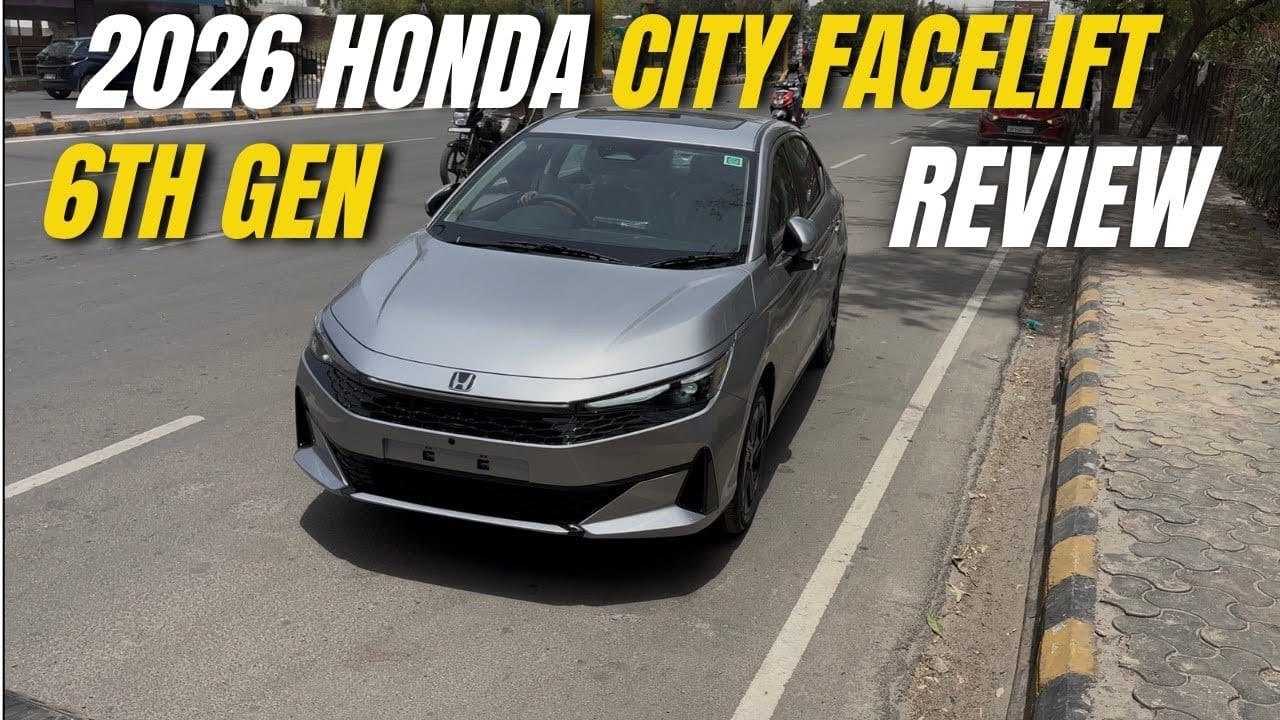
Honda City has been around long enough that your father probably considered buying one. And yet, here we are in 2026, still talking about it. That says something. The latest facelift doesn’t reinvent the car — it doesn’t need to. What it does is sharpen the edges, add features rivals have been throwing at buyers, and remind you why the City has stayed relevant in a segment that’s gotten brutally competitive.
I spent a good week with the car — Bengaluru traffic, a quick highway run to Mysuru, and some genuinely rough patches near Tumkur. Here’s what I actually think.
Design: Familiar Face, Sharper Details
Stand next to the 2026 City and you’ll notice the front has been reworked. The grille is wider, the LED DRL signature is now more aggressive, and the bumper gets larger air intakes that make it look slightly more purposeful than before. It’s not a dramatic change, but on the road, the car does look fresher than the model it replaces.
The side profile remains largely unchanged — long hood, clean shoulder line, and those 16-inch diamond-cut alloys that look genuinely good without trying too hard. The rear gets revised LED taillamps connected by a chrome strip. Tasteful. Not shouty.
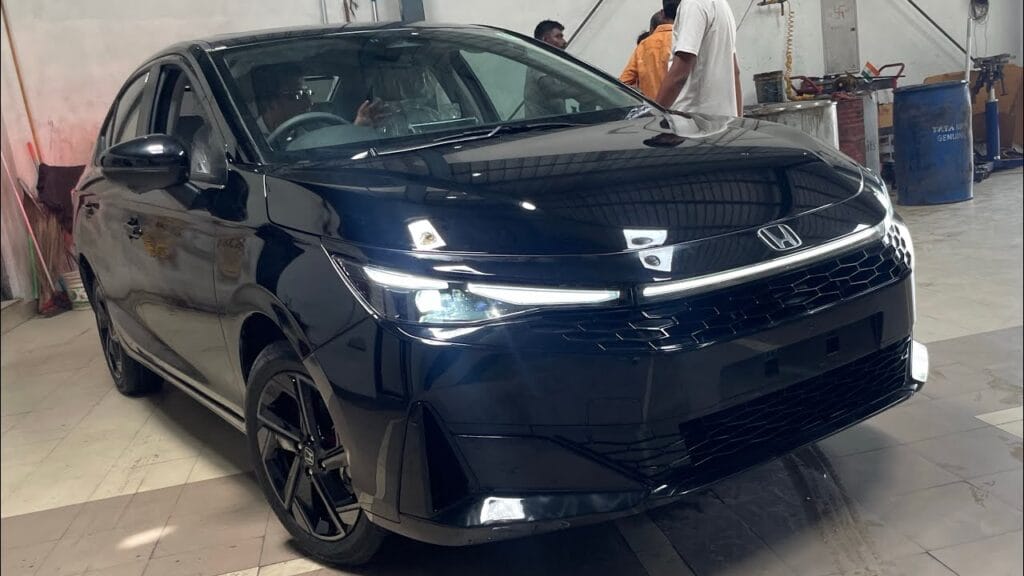
Road presence? It’s a sedan, so it won’t turn heads the way a big SUV does. But the City carries itself well. It looks like a car for someone who has their life sorted. Which, incidentally, is exactly who buys it.
Inside: Where Honda Has Always Had an Edge
Sit inside and the first thing you notice is how uncluttered it feels. Honda didn’t go crazy with screens everywhere. The 9-inch touchscreen sits high on the dashboard, angled towards the driver, which is the right call. The physical AC controls below it are genuinely appreciated — you don’t have to dig through menus just to change the fan speed.
Material quality is good for the price, not extraordinary. The top half of the dashboard uses soft-touch material, and the stitching on the seats looks neat. The lower panels are hard plastic — that’s true for most cars in this price range, so no points deducted there.
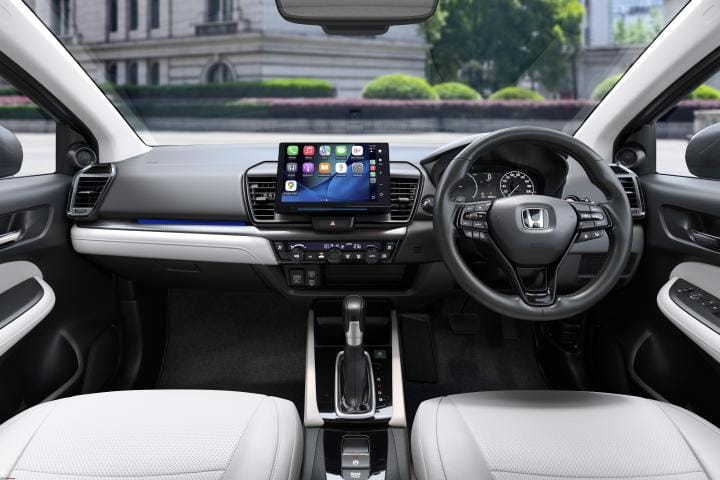
The front seats are supportive without being aggressive. Long drives are comfortable. Rear seats are where the City genuinely earns its family-car tag — there’s enough legroom for tall passengers, the cushioning is on the firmer side (which actually works better for longer journeys), and the middle seat is usable in a pinch, not just a punishment.
AC cooling is strong and consistent, front and rear vents work well together — important in Indian summers, especially if you’re in UP, Rajasthan, or Tamil Nadu where cabin cooling becomes a survival need.
Boot space stands at 506 litres. That’s class-leading. Three proper suitcases go in without drama. For families who travel, this matters more than a lot of the spec-sheet features.
Features: Finally Caught Up
Honda was late to the ADAS party. The 2026 facelift fixes that, at least in the top variant. You get Honda Sensing — which includes lane-keep assist, adaptive cruise control, and collision mitigation braking. These work reasonably well on highways but I’d keep them as a safety net, not a replacement for attention.
The infotainment system supports wireless Android Auto and Apple CarPlay. Connectivity is stable and the screen resolution is crisp. Connected car features include remote engine start, geofencing, and vehicle status checks via the Honda Connect app.
Ventilated front seats, a sunroof, a rear-view camera with parking sensors, and an air purifier with PM2.5 filter are present in the higher trims. The purifier is something Indian buyers — particularly those in Delhi, Mumbai, and Pune — actually care about. Honda knows their customer.
One feature I liked: the walk-away auto lock. Small thing. You’ll miss it in any other car once you’ve used it.
Engine and Driving Experience
Two options: the 1.5-litre naturally aspirated petrol (121 bhp) and the e:HEV strong hybrid (126 bhp system output).
The petrol engine is smooth, rev-happy, and paired with a CVT that’s genuinely one of the better ones in this segment. It doesn’t feel like you’re stirring rubber bands. City traffic is handled without stress. The engine stays quiet, the AC doesn’t noticeably kill performance, and overtaking on highways — with a short kickdown — happens confidently between 80-120 kmph.
The hybrid is a different experience altogether. It drives mostly on the electric motor in city conditions. The engine kicks in at higher speeds or under hard acceleration. There’s a distinct sense of smoothness — almost eerie in stop-go traffic — and the regenerative braking takes a few days to get used to, but then feels natural.
NVH levels are good. Wind noise stays controlled up to around 110 kmph. Road noise on coarse tarmac filters into the cabin a bit, but nothing alarming.
No diesel option. Honda dropped diesel some time ago and hasn’t looked back. Given current usage patterns and diesel price trajectories, it doesn’t feel like a big loss.
Mileage: Real Numbers, Not Brochure Math
The petrol CVT returns around 16-17 km/l on highways and 12-13 km/l in city conditions — real-world, AC on, normal driving style. Honda’s claim is 18.4 km/l; that’s achievable on an ideal highway run, but don’t budget around it.
The hybrid is where things get interesting. City mileage of 20-22 km/l is genuinely achievable because that’s where the electric motor does most of the work. Highway mileage drops to about 18-20 km/l as the petrol engine takes over more. For high-mileage city commuters, the hybrid pays back its premium in about 3-4 years depending on running.
Ride and Handling
The suspension setup — MacPherson struts up front, torsion beam at the rear — is tuned for comfort first. Potholes and broken patches are absorbed without making passengers feel victimised. There’s some vertical bobbing on sharp undulations, but nothing uncomfortable.
High-speed stability is confident. The car doesn’t feel nervous at 120 kmph. Steering is light, almost too light for enthusiast drivers, but ideal for urban use and appreciated by buyers who spend two hours daily in traffic.
It’s not a driver’s car. It was never meant to be.
Safety
Six airbags are standard across all variants — that’s a positive step and buyers should insist on nothing less. ADAS features (Honda Sensing) come in the top-spec ZX variant. Electronic Stability Control and hill start assist are available across the range.
The City has performed well in previous ASEAN NCAP evaluations. Honda’s structural rigidity has always been a strong point — it’s a brand that takes body shell integrity seriously, and that shows in how the car feels on bad roads.
Pros and Cons
Pros:
- Best-in-class boot space (506 litres)
- Refined and proven petrol and hybrid powertrains
- Strong real-world mileage, especially hybrid in city
- Honda Sensing ADAS — finally
- Comfortable rear seat for a family sedan
- Reliable long-term ownership record
Cons:
- No diesel option for high-kilometre highway users
- Hybrid variant has a significant price premium
- CVT only — no manual in higher variants
- Rear suspension can feel jiggly on very broken roads
- Some interior plastics feel average at this price
Variants and Pricing: Which One to Buy?
The City 2026 range starts around ₹12 lakh (ex-showroom) for the base petrol and goes up to approximately ₹20-21 lakh for the hybrid ZX.
Best value pick: Petrol V CVT — sits in the middle of the range, gets you the sunroof, wireless CarPlay, rear AC vents, and a good safety package. Skips ADAS but covers everything a practical family needs.
If you’re doing 60+ km daily in the city: Hybrid ZX — the running cost difference genuinely justifies the higher asking price over time.
Skip the base SV if you can — the missing features make the car feel incomplete.
Final Verdict
The Honda City facelift 2026 is not trying to win you over with gimmicks. It’s making a quiet, confident case — this is a well-built, practical, efficient sedan that will do exactly what you need it to do for the next 8-10 years without drama.
For families wanting a reliable second or primary car, professionals who commute daily, and buyers who prioritise resale value and service experience — this is still among the two or three best choices in its segment.
Its key rivals are the Hyundai Verna (sportier, more feature-loaded), Maruti Suzuki Ciaz (cheaper but dated), and the Skoda Slavia (better dynamics, steeper service costs). The City splits the difference in the best possible way.
If you want flash, look at the Verna. If you want substance with longevity, the City remains hard to argue against.
Frequently Asked Questions
Q1. Is the Honda City 2026 facelift worth buying over the Hyundai Verna?
Depends on priority. Verna offers more features and sportier looks. City offers better boot space, more refined ride, and typically lower service costs. Both are excellent — City suits practical buyers, Verna suits those who want a more exciting package.
Q2. What is the real-world mileage of Honda City 2026?
Petrol CVT: 12-13 km/l in city, 16-17 km/l on highways. Hybrid: 20-22 km/l in city, 18-20 km/l on highways.
Q3. Is the Honda City hybrid worth the extra money?
If you drive 50+ km daily in city conditions, yes. The fuel savings are real and measurable. For mostly highway use, the regular petrol CVT makes more financial sense.
Q4. How is rear seat comfort in the Honda City 2026?
Genuinely good for a C-segment sedan. Adequate legroom for 5’10” passengers, decent recline, and rear AC vents. Not as spacious as a compact SUV but better than most of its sedan rivals.
Q5. What is the maintenance cost of the Honda City?
Honda’s service intervals are 10,000 km or 12 months. Annual service typically costs between ₹6,000-10,000 depending on the service type. Parts availability is strong across Tier 1 and Tier 2 cities.
Q6. Does the Honda City 2026 get ADAS?
Yes, Honda Sensing (ADAS suite with lane keep assist, adaptive cruise, and auto emergency braking) is available on the top ZX variant. It is not available on mid-spec trims.
Q7. Which is the best variant of Honda City 2026 to buy?
The petrol V CVT offers the best value for most buyers. Those who want ADAS and ventilated seats should stretch to the ZX petrol. Daily city commuters logging high kilometres should consider the hybrid ZX.
Q8. Is Honda City good for long road trips?
Absolutely. The large boot, comfortable seats, good fuel efficiency on highways, and low-fatigue cabin make it well-suited for long drives. The hybrid version adds extra confidence with its efficiency on varied terrain.