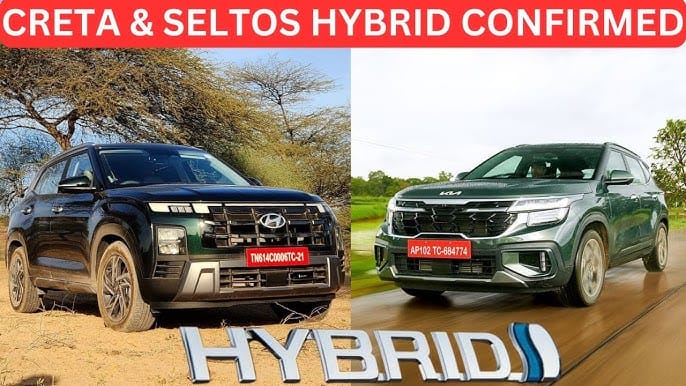
The Indian SUV market is about to get a lot more interesting. Hyundai and Kia are both working on hybrid versions of their two most popular SUVs, the Creta and the Seltos, and they are likely to hit showrooms sometime in 2027. If you are planning a car purchase in the next couple of years or simply tracking where the segment is headed, this piece covers everything worth knowing right now
Why This Matters More Than You Think
Strong hybrid technology in the sub-20 lakh segment is still rare in India. The Maruti Grand Vitara and Toyota Urban Cruiser Hyryder showed buyers that a proper self-charging hybrid can genuinely deliver 25+ kmpl in city traffic. Hyundai and Kia watched that closely. And now they want in.
The Creta is India’s bestselling midsize SUV. The Seltos sits right alongside it, sharing most of the mechanicals under the skin. Both cars already sell in massive numbers in their current petrol and diesel forms. Add a proper hybrid powertrain to either of them, and the segment changes overnight.
What We Know About the Design
Both cars are expected to arrive with fresh styling updates to distinguish the hybrid versions from the standard lineup. The current Creta facelift already looks sharp with its H-shaped DRL signature and wide stance. The hybrid variant may get a slightly revised front fascia with a different grille treatment, possibly a blue-accented badge setup similar to what you see on the Tucson Hybrid abroad.
Expect the Seltos hybrid to follow a similar path. Kia has always given the Seltos a sportier, more aggressive look compared to the Creta, and that design language should carry forward. Both cars ride on 17-inch alloy wheels in most variants, and the dimensions are not expected to change significantly from their current forms.
Road presence for both is already strong. The Creta in particular has that wide-shouldered, planted look that stands out in traffic. The Seltos feels a bit more sculpted, a bit more European in character. Either way, these are good-looking cars and you will not feel like you are compromising on style by going hybrid.
Interior and Cabin Space: What to Expect
Both platforms are mature and well-sorted by now. The current Creta interior, with its 26-inch panoramic display and layered dashboard layout, already feels like a genuinely modern space. Hyundai will likely carry this into the hybrid version with minor changes.
Rear seat comfort in both cars is good for a family. Knee room is adequate for most adults, and the seat itself is well-cushioned. The Seltos has a slight edge in terms of rear seat squab length, which makes longer highway drives easier on the legs.
Boot space in the hybrid versions is where things could get tricky. Hybrids need space for the battery pack, and depending on where Hyundai and Kia mount it, you may see a slight reduction in cargo capacity. The Grand Vitara’s hybrid version already took a small hit in boot space. Expect something similar here, possibly in the 350 to 380 litre range.
AC performance has always been a strong point in both cars, especially important given Indian summers. The compressor setup on the hybrid system may run off electric power at idle, which would actually improve cabin cooling in stop-and-go traffic compared to the regular petrol versions.
Hybrid Technology: The Heart of It
Here is where it gets genuinely exciting. Hyundai and Kia are expected to use a version of their proven 1.5-litre four-cylinder petrol engine paired with a parallel hybrid system. This is not the mild hybrid tech they have been offering elsewhere, but a stronger self-charging setup closer to what Toyota uses in the Hyryder.
The system would include a dedicated electric motor, a lithium-ion battery pack, and the ability to run in pure EV mode at lower speeds. In city traffic, where you are crawling at 20 to 40 kmph, the car would lean heavily on the electric motor. The petrol engine kicks in on the highway or when you need stronger acceleration.
Real-world performance should feel brisk in everyday conditions. The combined output is expected to be somewhere around 140 to 150 bhp, which is healthy for an SUV in this weight class. Overtaking on highways should not feel like a chore, and city driving will feel noticeably smoother than a turbocharged petrol.
NVH levels should be good. One of the natural benefits of a hybrid setup is that the combustion engine is not always running, so cabin quietness improves especially in slow traffic.
Also Read 5 All-New Mid-Size SUVs Coming to India Within the Next 12 Months
Mileage: The Real Question Everyone Is Asking
This is the reason most buyers will even consider the hybrid. Current petrol Cretas and Seltoses return around 14 to 16 kmpl on the highway and roughly 10 to 12 in the city under normal conditions. The hybrid versions are expected to flip that equation.
In city traffic with frequent stop-start cycles, expect real-world figures in the range of 22 to 26 kmpl. The electric motor does most of the work in slow traffic and the regenerative braking keeps the battery topped up. On open highways at 80 to 100 kmph, expect 18 to 21 kmpl, since the petrol engine runs more consistently at those speeds.
These are not wild estimates. The Grand Vitara Hybrid consistently delivers 22 to 25 kmpl in mixed city use for most owners. Hyundai and Kia, with their engineering resources, should be able to match or beat that.
Ride Quality and Handling
Both cars are well-sorted in this department already. The Creta has a slightly plusher ride, absorbing broken roads without much drama. The Seltos rides a touch firmer, which gives it better high-speed composure but can feel slightly jittery on really bad village roads.
The additional weight from the battery pack in the hybrid version might actually help settle the ride at speed, much like how heavier cars tend to feel more planted. Steering in both cars is light and easy, which works well in city conditions. Highway driving is stable without feeling nervous.
Safety: Getting Better Every Generation
Both cars in their current form score well on crash tests. Hyundai has been pushing six airbags across more variants, and ADAS features like lane keep assist, forward collision warning, and adaptive cruise control are available on higher trims.
Expect the hybrid versions to carry the same safety architecture, possibly with Level 2 ADAS on top variants. The chassis rigidity and build quality are already at a good standard. These are not tin cans.
Pros and Cons
Pros
- Excellent real-world fuel efficiency, especially in city conditions
- Proven platform with mature ride and handling balance
- Good interior space and feature set
- Reduces petrol bills significantly for high-mileage users
- Self-charging, no plug-in hassle
Cons
- Boot space may be smaller than regular versions
- Hybrid premium over petrol variants will add to upfront cost
- Servicing a hybrid needs trained technicians, not every garage can handle it
- Expected pricing of 18 to 22 lakhs may price out value-conscious buyers
- No diesel alternative if you are a long-distance highway user
Variants and Pricing: Which One Makes Sense?
Both cars will likely follow a two or three variant structure for the hybrid, with the mid-variant offering the best value. Going for the base hybrid trim makes sense if your primary goal is fuel savings. The top variant will stack up features like a panoramic sunroof, ventilated seats, 360-degree cameras, and full ADAS, and will cost noticeably more.
Expected pricing: the Creta Hybrid should start around Rs 17 to 18 lakh and go up to Rs 21 to 22 lakh for the fully loaded version. The Seltos Hybrid will be priced similarly, possibly starting slightly higher given Kia’s positioning in the market.
The mid-variant, likely to come with sunroof, connected features, and the core tech, will be the sweet spot for most buyers.
Petrol vs Diesel vs Hybrid: Which Should You Buy?
If you drive mostly in the city and cover 1200 km or more per month, the hybrid pays for itself over three to four years compared to a petrol. If you live in a tier 2 or tier 3 city with easy highway access and drive mainly on open roads, a diesel 1.5 CRDi version still makes financial sense at lower prices.
The regular turbo petrol 1.5 DCT remains the best option for buyers who want performance and do not stress much about fuel costs.
Hybrid is for the pragmatic, high-mileage city driver who wants modern tech without switching to an EV.
Verdict
The Hyundai Creta Hybrid and Kia Seltos Hybrid are not just feature updates. They represent a genuine shift in how these two cars are positioned in the market. If Hyundai and Kia price them right, around Rs 17 to 20 lakh for the sweet-spot variants, they could do to the Grand Vitara and Hyryder what the regular Creta did to the competition years ago.
The ideal buyer is someone who commutes daily in a metro city, covers 1500 or more kilometres a month, and wants to bring down their fuel bill without dealing with charging infrastructure. Families who travel frequently within the city will love the smooth hybrid experience.
Key rivals will be the Maruti Grand Vitara Hybrid, Toyota Urban Cruiser Hyryder, and depending on pricing, even the Honda Elevate on the higher end. The segment is heating up, and 2027 is going to be a great year to buy an SUV.
Frequently Asked Questions
When will the Hyundai Creta Hybrid and Kia Seltos Hybrid launch in India?
Both are expected to launch in 2027, though official dates have not been confirmed by either brand.
Will these be self-charging hybrids or plug-in hybrids?
They are expected to be strong self-charging hybrids, similar to the Toyota Hyryder system. No external charging needed.
What mileage can I expect in city traffic?
Realistically, 22 to 26 kmpl in urban conditions with regular stop-and-go traffic.
Will hybrid versions have less boot space?
Likely yes, by a small margin due to the battery pack. Expect around 350 to 380 litres compared to 430-plus litres in the standard versions.
Is it worth waiting for the hybrid or should I buy now?
If fuel savings matter to you and you can wait until 2027, yes. If you need a car this year, the current petrol or diesel Creta and Seltos are both excellent choices.
How expensive will maintenance be compared to a regular petrol version?
Routine maintenance costs should be similar. Hybrid battery replacements are expensive but usually come with long warranties. Hyundai and Kia service networks will need to be trained for hybrid systems.
Which is better, the Creta Hybrid or Seltos Hybrid?
Both share the same platform and powertrain. The Creta will likely be slightly more affordable. The Seltos suits buyers who want a sportier feel and are willing to pay a bit more.
Should I consider the Grand Vitara Hybrid instead?
If you want a hybrid SUV right now, yes. But if you are loyal to Hyundai or Kia and can wait, the Creta and Seltos hybrid versions should offer comparable or better value when they arrive.